Coffee
Best Coffee Tampers for Espresso Beginners: 5 Picks for Consistent Shots
Author:Mike Fakunle
|
Released:January 10, 2026
Here’s what most beginners miss: great espresso isn’t only about the machine or beans. Your coffee tamper directly affects extraction, flavor balance, and crema.
If your shots taste sour or bitter, uneven tamping could be the reason. The right espresso tamper helps you apply consistent pressure and level the coffee bed every time.
Research published by the Specialty Coffee Association shows that espresso extraction works best when water contacts evenly distributed grounds at around 9 bars of pressure and 25–30 seconds brew time [1]. A precise espresso tamper helps you reach that window consistently.
Based on hands-on testing and barista experience, here are the coffee tampers that beginners will find reliable, comfortable, and worth every penny.
1. Espro Calibrated Flat Tamper
The Espro Calibrated Flat Tamper is built specifically to remove guesswork. It features an internal spring calibrated to 30 pounds of pressure, which is widely recommended for espresso preparation.
For beginners, pressure inconsistency is common. One shot may be tamped lightly, the next too hard. The calibrated mechanism clicks once the correct force is reached, helping you develop muscle memory.
The stainless steel base ensures even compression, and it’s available in 51 mm, 53 mm, and 58 mm sizes. Expect to pay between 60 and 70 dollars. It’s not the cheapest coffee tamper, but it dramatically reduces learning errors.
2. Rattleware Round Handle Tamper
Cafés have long trusted Rattleware for simple, durable tools. Their Round Handle Tamper is a classic, non-calibrated espresso tamper that’s affordable and sturdy.
The heavy stainless steel base weighs about 1 pound, which helps apply natural downward pressure without strain. For beginners practicing technique, this weight provides stability.
It’s commonly available in 58 mm, the standard commercial size. Price typically ranges from 30 to 40 dollars, making it a strong value option if you want a dependable coffee tamper without added mechanics.
3. Normcore V4 Spring-Loaded Tamper
Normcore has gained attention among home baristas for combining affordability with smart engineering. The V4 Spring-Loaded espresso tamper offers interchangeable springs set at 15 lb, 25 lb, and 30 lb.
This flexibility lets beginners experiment with pressure while maintaining consistency. The self-leveling design also helps keep the puck flat, which reduces channeling.
Most versions cost between 40 and 55 dollars. For someone starting, this coffee tamper strikes a balance between control and simplicity.
4. Motta Competition Tamper
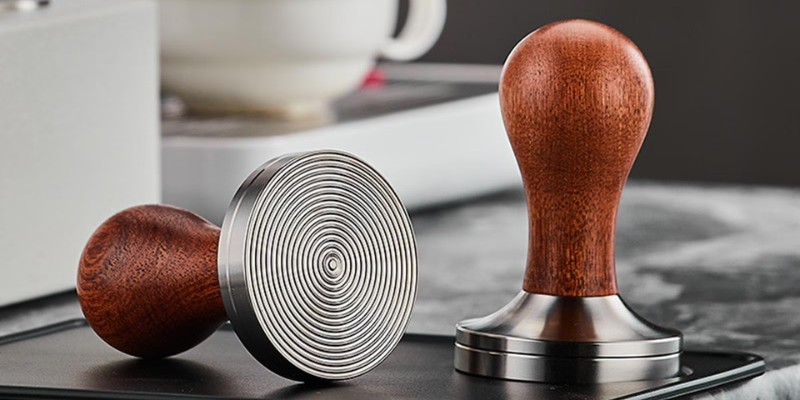
The Metallurgica Motta Competition Tamper is widely used in professional settings. Manufactured in Italy, it features a flat stainless steel base and ergonomic wooden handle.
While not calibrated, its weight distribution makes it easy to apply a steady force. Many baristas prefer a flat base because it compresses grounds evenly across the basket.
Retail price ranges from 45 to 65 dollars. If you’re serious about building proper espresso tamper technique from day one, this is a solid long-term investment.
5. LuxHaus 51mm and 54mm Tamper
For beginners using machines like entry-level home models with smaller portafilters, size matters. LuxHaus offers well-machined tampers in 51 mm and 54 mm sizes.
Many budget espresso machines, including models from De'Longhi, use 51 mm baskets. A properly fitted coffee tamper minimizes side gaps and improves extraction uniformity.
Priced at around $ 25 to $ 35, this option is affordable and beginner-friendly. It doesn’t include calibration, but it’s precisely sized and durable.
How to Choose the Right Coffee Tamper
- Measure your portafilter basket.
Common diameters include 51 mm, 53 mm, 54 mm, and 58 mm. A 58 mm espresso tamper fits most commercial machines, while smaller sizes are common in home setups.
- Consider weight.
Most quality tampers weigh between 400 and 600 grams. Heavier tampers help maintain downward stability.
- Decide between calibrated and manual.
A calibrated coffee tamper is ideal if you want repeatable results with minimal practice. Manual tampers are less expensive and teach tactile control.
Flat bases are standard and recommended for beginners. Convex bases exist, but they require more technique to avoid uneven compression.
Practical Tamping Tips for Beginners
Use a scale to dose consistently. For example, 18 grams in, aiming for 36 grams out in 25–30 seconds. According to guidelines from the National Coffee Association [2], grind size and tamping pressure directly influence extraction rate.
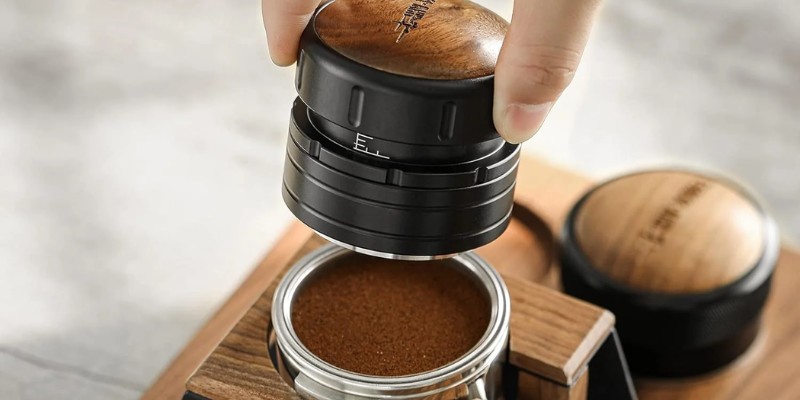
Hold the espresso tamper like a doorknob. Keep your wrist straight and elbow at 90 degrees. Press down firmly and evenly until resistance is felt.
Avoid twisting aggressively after tamping. A slight polish is fine, but over-rotation can disturb the puck.
Clean your coffee tamper regularly. Coffee oils build up and affect performance. A simple wipe with a damp cloth after each session prevents residue.
Why the Right Tamper Improves Flavor
Uneven tamping leads to channeling, where water finds weak spots and bypasses dense areas. This results in sour under-extracted sections and bitter over-extracted patches in the same shot.
A study emphasizes the role of even puck density in consistent extraction. Beginners often blame the grinder, but the espresso tamper plays an equally important role.
Spending 30 to 70 dollars on a reliable coffee tamper often improves shot consistency more than upgrading accessories.
Build Your Skills With the Right Tool
Start with the correct size and a comfortable handle. Practice applying steady pressure rather than focusing on force alone. Over time, you’ll notice smoother flow, richer crema, and balanced taste.
The best coffee tamper for beginners is one that fits properly, feels stable, and supports consistent technique. Choose wisely, practice daily, and your espresso will reflect the difference.
A better espresso tamper doesn’t just compress grounds. It builds confidence in the machine. Invest in one that supports your learning curve and keep refining your routine.
References
[1] Specialty Coffee Association - https://sca.coffee/
[2] National Coffee Association - https://www.ncausa.org/
You May Like
-

-
Coffee
Culture Coffee How Coffee Culture Shapes Communities, Traditions, and Modern Lifestyles
-
Coffee
More Americans Drink Coffee Than Water: What's Behind the Numbers
-
Guide
How to Store Coffee Beans for Better Flavor at Home
-
Recipe
The Easiest Mocha Recipe: Just 3 Ingredients For A Decadent Treat
-
Coffee
Unlock Pure Flavor: A Barista's Guide to the Best Manual Coffee Grinder